
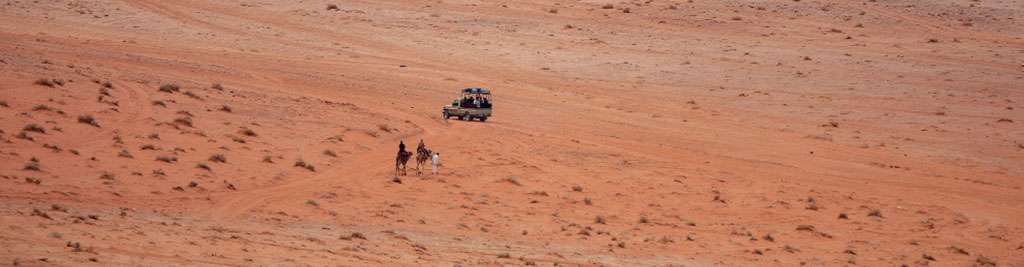
Deserts, with their vast and seemingly endless landscapes, hold an enigmatic allure. These arid regions, characterized by minimal rainfall, harsh climates, and unique ecosystems, cover approximately one-third of the Earth’s land surface. While many envision deserts as scorching sandy expanses, they can also be cold, rocky, or covered in ice. In this journey through some of the world’s largest deserts, we will explore their striking landscapes, extreme conditions, and the fascinating life that thrives in these challenging environments.
1. Antarctic Desert – The Largest and Coldest
Size: 14 million square kilometers (5.4 million square miles)
Location: Antarctica
Surprising to many, the world’s largest desert is not a scorching sand dune-covered expanse but the icy wilderness of Antarctica. Defined by its arid conditions, Antarctica receives less than 200 millimeters (8 inches) of precipitation annually, making it one of the driest places on Earth. The continent is covered by a thick ice sheet, and temperatures can plummet to -80°C (-112°F).
Despite its extreme cold, Antarctica is home to fascinating wildlife, including emperor penguins, seals, and various seabirds. Scientific research stations scattered across the continent provide valuable insights into climate change, glaciology, and the history of our planet.
2. Arctic Desert – A Frozen Wilderness
Size: 13.9 million square kilometers (5.3 million square miles)
Location: Arctic regions of Canada, Greenland, Russia, and the Arctic Ocean
The Arctic Desert, much like its southern counterpart, consists of vast ice-covered landscapes and tundra with minimal precipitation. While slightly smaller than the Antarctic Desert, it remains one of the most extreme environments on Earth. Temperatures can drop below -50°C (-58°F), and ice covers much of the land for most of the year.
Despite the harsh conditions, the Arctic is home to resilient species such as polar bears, Arctic foxes, and reindeer. Indigenous communities, such as the Inuit, have adapted to the environment, maintaining traditional ways of life while incorporating modern advancements.
3. Sahara Desert – The Largest Hot Desert
Size: 9.2 million square kilometers (3.6 million square miles)
Location: North Africa
The Sahara Desert is the largest hot desert in the world, covering vast parts of Algeria, Chad, Egypt, Libya, Mali, Mauritania, Morocco, Niger, Sudan, and Tunisia. It is known for its towering sand dunes, rocky plateaus, and sparse vegetation.
Daytime temperatures in the Sahara can exceed 50°C (122°F), while nighttime temperatures drop dramatically. Despite these harsh conditions, life persists in the form of desert foxes, camels, and nomadic tribes such as the Tuareg, who have adapted to the desert’s extreme climate. The Sahara also holds historical significance, with ancient rock art and remnants of lost civilizations buried beneath the sand.
4. Arabian Desert – The Heart of the Middle East
Size: 2.3 million square kilometers (0.9 million square miles)
Location: Middle East (Saudi Arabia, Yemen, Oman, UAE, Jordan, Iraq)
Stretching across the Arabian Peninsula, the Arabian Desert is one of the driest places on Earth. It includes the vast Rub’ al Khali, also known as the Empty Quarter, one of the largest continuous sand deserts.
Despite its arid conditions, the desert supports a variety of wildlife, including oryx, sand gazelles, and falcons. The Arabian Desert has played a crucial role in history, serving as the backdrop for ancient trade routes and the birthplace of major civilizations. Today, its rich oil reserves contribute significantly to global energy production.
5. Gobi Desert – A Cold and Rugged Terrain
Size: 1.3 million square kilometers (0.5 million square miles)
Location: China and Mongolia
Unlike the sandy expanses of the Sahara, the Gobi Desert is known for its rocky terrain, extreme temperatures, and strong winds. It experiences scorching summers and bitterly cold winters, with temperatures ranging from 40°C (104°F) in summer to -40°C (-40°F) in winter.
The Gobi has a rich paleontological history, with numerous dinosaur fossils discovered in its vast expanses. It also holds historical significance as part of the Mongol Empire and the ancient Silk Road. Nomadic herders continue to inhabit the region, living in traditional yurts and raising livestock.
6. Kalahari Desert – A Semi-Arid Wonderland
Size: 900,000 square kilometers (350,000 square miles)
Location: Southern Africa (Botswana, Namibia, South Africa)
The Kalahari Desert is a semi-arid region with more vegetation than typical deserts, featuring grasslands, acacia trees, and seasonal water sources. While technically classified as a desert due to low rainfall, it supports a diverse range of wildlife, including lions, meerkats, and antelope.
Indigenous groups such as the San people have inhabited the Kalahari for thousands of years, mastering the art of survival in this challenging environment. Their deep knowledge of the land, including tracking techniques and medicinal plant use, is a testament to human adaptability.
7. Patagonian Desert – South America’s Largest
Size: 673,000 square kilometers (260,000 square miles)
Location: Argentina and Chile
The Patagonian Desert, also known as the Monte Desert, is the largest desert in South America. Unlike traditional hot deserts, Patagonia is a cold desert with strong winds and low precipitation. Its landscape is a mix of arid steppes, plateaus, and rugged mountains.
Despite its harsh climate, the Patagonian Desert is home to unique wildlife such as guanacos, rheas, and Andean condors. The region also holds archaeological significance, with ancient cave paintings and fossils revealing insights into prehistoric life.
Conclusion
The world’s largest deserts, whether covered in sand, ice, or rock, are some of the most extreme and fascinating environments on Earth. Each desert has a unique character shaped by geography, climate, and history. Despite their harsh conditions, these landscapes support resilient life forms, from polar bears in the Arctic to nomadic tribes in the Sahara.
Exploring deserts is a journey into the heart of nature’s extremes, where the forces of wind, temperature, and time shape the land in mesmerizing ways. Whether it’s the icy expanse of Antarctica, the sun-scorched dunes of the Sahara, or the windswept plains of Patagonia, these arid lands remind us of the beauty and resilience of our planet.