
Vote of confidence: Regarding the Bihar Assembly Election 2025
The Bihar election will serve as a benchmark for assessing the neutrality and effectiveness of the Election Commission of India
Introduction
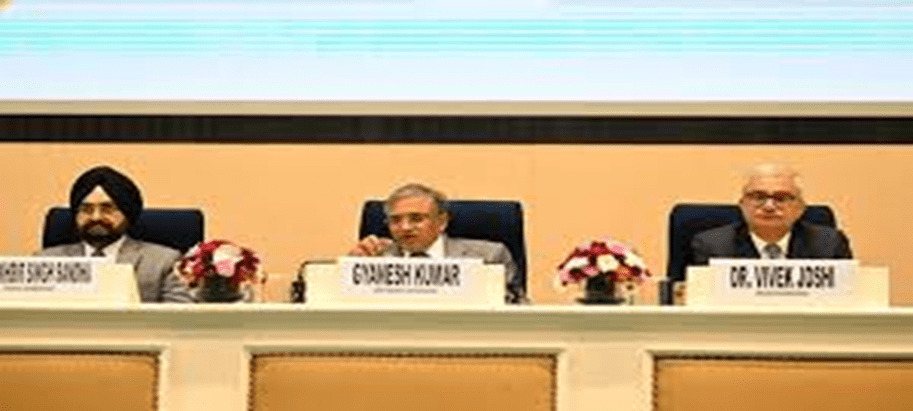
The Bihar Assembly Election of 2025 is poised to be a watershed moment in the state’s political trajectory, carrying significant implications for both regional power dynamics and the national political landscape. With the bugle sounded for a two-phase poll on November 6 and 11, and the counting of votes scheduled for November 14, the election is being keenly watched not just for its political verdict but also for the integrity of the electoral process itself. The Chief Election Commissioner, Gyanesh Kumar, has aptly termed it the ‘mother of all elections’, underscoring the high stakes involved for all stakeholders.
The Political Cauldron: Alliances and Aspirations
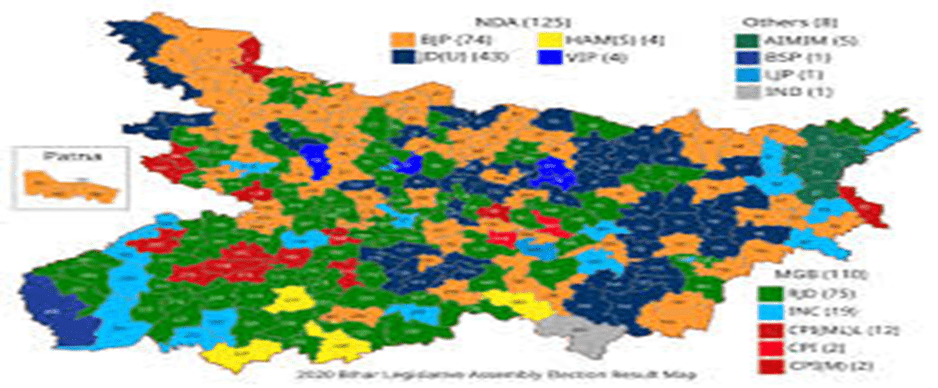
The primary contest is between the ruling National Democratic Alliance (NDA) and the opposition Mahagathbandhan (Grand Alliance). The NDA, a coalition of the Bharatiya Janata Party (BJP) and the Janata Dal (United) led by the incumbent Chief Minister Nitish Kumar, is seeking to retain power. However, the alliance faces the challenge of navigating the ambitions of the BJP to assert greater dominance and the political legacy of an aging Nitish Kumar, who has been at the helm for nearly two decades. The JD(U) has expressed confidence in Kumar’s leadership, confirming him as the face of the alliance for the upcoming polls.
On the other side, the Mahagathbandhan, primarily comprising the Rashtriya Janata Dal (RJD), the Congress, and Left parties, is striving to unseat the incumbent government. The alliance is grappling with its own set of challenges, including intricate seat-sharing negotiations and presenting a united front. The RJD, led by Tejashwi Yadav, remains a formidable force, banking on its traditional Muslim-Yadav support base.
A new and intriguing element in this election is the entry of Prashant Kishor’s Jan Suraaj Party (JSP), which is positioning itself as a third alternative focused on people-centric issues like unemployment, migration, and corruption. The JSP’s performance will be a key factor to watch, with the potential to disrupt traditional vote banks and influence the final outcome.
Electoral Integrity in the Spotlight
A significant dimension of the 2025 Bihar election is the Election Commission of India’s (ECI) focus on enhancing electoral integrity. The ECI’s abrupt announcement of a Special Intensive Revision (SIR) of the electoral rolls, a process aimed at “purification” by removing deceased voters, duplicate entries, and unproven citizens, has been a focal point of discussion. This initiative, which saw the removal of approximately 69 lakh names from Bihar’s electoral rolls, is being viewed as a pilot for a nationwide rollout.
Furthermore, the ECI has introduced several measures to bolster public trust in the electoral process. These include reducing the maximum number of voters per polling booth to 1,200 from 1,500 and ensuring that the counting of postal ballots is completed before the final rounds of EVM and VVPAT counting. The mandatory counting of VVPAT slips in case of a mismatch with EVM data is another step towards greater transparency.
Caste, Development, and the Decisive Voter
As is characteristic of Bihar’s politics, caste equations are expected to play a crucial role in shaping the electoral verdict. The NDA is banking on the support of the Extremely Backward Classes (EBCs), a significant vote bank cultivated by Nitish Kumar, alongside the BJP’s traditional upper-caste and non-Yadav OBC support. The Mahagathbandhan, on the other hand, is relying on the consolidation of the Muslim-Yadav (MY) combination and the support of other backward communities.
Beyond the caste calculus, issues of governance, development, and law and order will be central to the political discourse. The performance of the incumbent government over the past five years will be under intense scrutiny, with the opposition highlighting failures and the ruling alliance showcasing its achievements. The role of women voters and migrant workers, who have emerged as decisive electoral forces in recent years, will also be critical.
Conclusion: A Mandate for Bihar’s Future
The Bihar Assembly Election 2025 is more than just a political contest; it is a test of the resilience of alliances, the appeal of new political formations, and the robustness of India’s electoral democracy. The verdict on November 14 will not only determine the next government in Patna but will also have a ripple effect on national politics, potentially reshaping political alignments and setting the tone for future electoral battles. For the people of Bihar, this election represents a crucial opportunity to deliver a vote of confidence on the path of development, social justice, and governance they envision for their state.
UPSC mains exam question based on the provided topic:
GS Paper 1: Indian Society: Salient features of Indian Society, Diversity of India.Role of women and women’s organizations.Social empowerment, communalism, regionalism & secularism.
GS Paper 2: Polity and Governance: Salient features of the Representation of the People’s Act.
Appointment to various Constitutional posts, powers, functions, and responsibilities of various Constitutional Bodies (specifically, the Election Commission of India).Statutory, regulatory, and various quasi-judicial bodies.Government policies and interventions for development in various sectors and issues arising out of their design and implementation.
Question 1: “The Election Commission of India’s (ECI) recent measures in Bihar, such as the Special Intensive Revision (SIR) of electoral rolls and strengthening VVPAT counting protocols, are being presented as a model for enhancing electoral integrity. Critically analyse the potential of these initiatives to ensure free and fair elections, while also discussing the challenges and concerns they might raise.” (250 words, 15 marks)
Question 2: “The political landscape of the Bihar Assembly Election 2025 reflects a complex interplay between the persistent influence of caste-based identity politics and the emerging aspirations for development-centric governance. Discuss this statement, highlighting how both traditional and contemporary factors are shaping the electoral dynamics and coalition strategies in the state.” (150 words, 10 marks)
(Source – The Hindu)