
Undoubtedly: Regarding debate and the democracy of India
The dysfunction observed in legislatures arises from the concentration of power within the executive branch
Introduction
In a recent address to the All India Speakers’ Conference, Union Home Minister Amit Shah rightly asserted that “debate must take place in a democracy.” This statement is a foundational principle of any vibrant democratic system. However, as highlighted in the article “Beyond debate: On debate and India’s democracy,” a deeper analysis of India’s current parliamentary conduct reveals a distressing paradox. The very chambers designed for deliberation are increasingly becoming arenas of disruption, where the culture of debate is being systematically eroded. This decline, stemming from an over-concentration of executive power and acrimonious political relationships, poses a significant threat to the health and substance of India’s representative democracy.
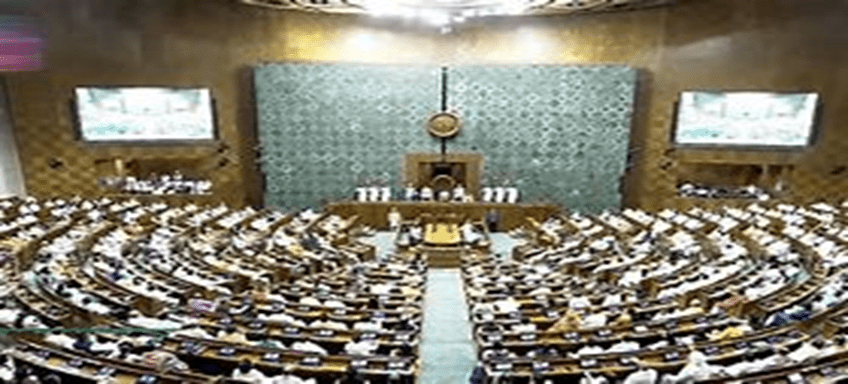
The Erosion of Parliamentary Scrutiny
The statistics regarding the recent sessions of Parliament paint a grim picture of legislative dysfunction. According to an analysis by PRS Legislative Research, the Lok Sabha functioned for a mere 29% of its scheduled time and the Rajya Sabha for 34% during a recent session, the lowest for the 18th Lok Sabha. During this period, 15 Bills were passed with minimal to no debate, fundamentally undermining the legislative process which requires careful scrutiny and diverse viewpoints.
Furthermore, vital accountability mechanisms have been rendered ineffective. In the Lok Sabha, only 8% of starred questions received an oral reply from the government, while the figure stood at a dismal 5% in the Rajya Sabha. This trend signifies a dangerous shift where legislative action becomes a mere formality of executive will, rather than a product of thorough parliamentary deliberation. The frequent adjournments, often triggered by protests on critical issues such as the demand for a debate on the Special Intensive Revision of electoral rolls in Bihar, have become the norm rather than the exception.
Concentration of Power and Political Bitterness
At the heart of this legislative paralysis is the growing concentration of power within the executive. A government with a strong majority can often push through legislation without substantial debate, marginalizing the role of the opposition. This creates a vicious cycle where the opposition, feeling unheard, resorts to disruption as its primary tool of protest.
This structural issue is exacerbated by the deep-seated bitterness that now characterizes the relationship between the government and the Opposition. The space for consensus-building and bipartisan cooperation has shrunk dramatically, reducing Parliament to what the article aptly describes as a “theatre of mutual diatribe.”[1] This adversarial environment ensures that common ground is rarely found, and national interest is often lost in the noise of partisan politics. The result is a dysfunctional legislature where dialogue is replaced by diatribe, and accountability is sacrificed for political expediency.
The Imperative of Debate for a Healthy Democracy
The decline in parliamentary debate is not merely a procedural issue; it strikes at the core of democratic governance. Debate is the mechanism through which the executive is held accountable for its actions and policies. It is the crucible where laws are tested, refined, and improved through diverse perspectives. Without robust debate, legislation can be rushed, ill-conceived, and disconnected from the needs of the populace.
Parliamentary deliberations also serve as a crucial platform for representing the diverse voices of the Indian people. When debate is stifled, so too is the expression of public will and dissent. It is through these debates that citizens are informed about the complexities of governance, fostering a more engaged and aware electorate. A silent parliament risks creating a disconnect between the rulers and the ruled, eroding public trust in democratic institutions.
Conclusion: The Path to Restoring Dialogue
While the Home Minister’s call for more debate is a welcome acknowledgment of the problem, its true value lies in its translation into concrete action. The onus lies significantly on the government to create an environment conducive to healthy deliberation. This requires not just tolerance for dissent, but an active engagement with the Opposition’s concerns.
A meaningful starting point, as suggested by the article, could be fostering a new era of consensus by gestures such as the election of an Opposition leader as the Deputy Speaker of the Lok Sabha.Beyond such symbolic acts, there must be a genuine commitment from both the treasury and opposition benches to restore the sanctity of parliamentary proceedings. India’s democracy is not merely about holding elections; it is about the continuous and substantive conversation that must occur within its elected bodies. Revitalizing the culture of debate is, therefore, not just a matter of procedure, but an urgent national imperative to strengthen the very foundations of India’s democratic ethos.
UPSC MAINS EXAM QUESTIONS Based on the Provided Topic:
General Studies Paper 2: Governance, Constitution, Polity, Social Justice. Parliament and State Legislatures—structure, functioning, conduct of business, powers & privileges and issues arising out of these. Separation of powers between various organs. Functions and responsibilities of the Union.
Indian Constitution—Significant provisions.
Question 1: The Indian Parliament, intended as a forum for robust deliberation, is increasingly witnessing a decline in substantive debate, reducing its effectiveness. Critically analyze the primary factors contributing to this decline and evaluate its adverse implications for executive accountability and the health of India’s democracy. (15 Marks, 250 Words)
Question 2: “Disruption has replaced discussion” is a frequent critique of the functioning of the Indian Parliament. In this context, discuss the constitutional and procedural measures that can be undertaken to restore the primacy of debate and deliberation. What is the respective role of the government, the opposition, and the presiding officers in fostering a culture of constructive dialogue? (15 Marks, 250 Words)
(Source – The Hindu)