
Jagdeep Dhankar’s resignation from the position of Vice-President represents a setback for parliamentary democracy
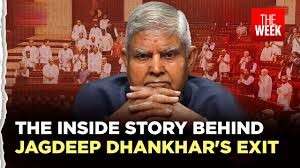
- The Vice President of India holds a dual and critical role: as the second-highest constitutional functionary and as the ex-officio Chairman of the Rajya Sabha. This position demands the highest degree of impartiality and constitutional morality.
- The Chairman as an Umpire: The Chairman’s primary duty is to ensure the smooth functioning of the Upper House, protect the rights of its members (both ruling and opposition), and uphold parliamentary rules and conventions.
- Potential for Conflict: A resignation under duress suggests a fundamental conflict between the occupant’s duty to remain a neutral umpire and the political pressures exerted by the executive. This “agony” likely stems from an untenable situation where upholding the dignity of the House conflicts with the government’s legislative agenda, potentially involving the passage of contentious bills without adequate debate or scrutiny.
- Majoritarianism vs. Deliberation: The event would symbolise the growing tendency of a strong executive to view the Upper House not as a chamber for review and deliberation, but as an obstacle to be managed or overcome.
- Weaponization of Rules: An incumbent like Shri Jagdeep Dhankhar, whose past tenure as a Governor was marked by confrontations, might find the pressures to use the Chairman’s authority—such as suspending members or hastily passing legislation—incompatible with constitutional principles, leading to an exit. This highlights a trend where parliamentary rules are used not to facilitate debate but to stifle dissent.
- Diminishing the Office: Such an event risks diminishing the stature of the office of the Vice President, potentially reducing it to a politically vulnerable position rather than a respected constitutional authority.
- Impact on Parliamentary Functioning: It sets a dangerous precedent. Future occupants of the Chair might feel intimidated, leading to a more compliant Rajya Sabha, thereby weakening its role as a house of revision. This compromises the bicameral nature of our legislature, which is a key feature of the basic structure of the Constitution.
- Public Trust: The sight of a high constitutional functionary resigning under perceived political pressure erodes public trust in the impartiality and integrity of the country’s democratic institutions.
- Neutrality in Public Office: The core tenet for any constitutional authority is neutrality. The “agony” signifies a struggle to maintain this neutrality in a hyper-partisan environment.
- Upholding Dignity: The resignation can be interpreted as a final act to protect the dignity of the office when its ability to function independently is compromised. It serves as a reminder that constitutional morality—the adherence to the spirit and not just the letter of the constitution—must guide the actions of all functionaries.