
The famine occurring in Gaza is a tragedy that has been caused by Israel
The United States is the sole power possessing influence over Israel. However, with Washington remaining silent, there appears to be no resolution in sight for this ongoing tragedy
Introduction:
The recent declaration of famine in Gaza by the UN-backed Integrated Food Security Phase Classification (IPC) has sent shockwaves across the globe, highlighting a catastrophic humanitarian crisis.This declaration, a rare and grim milestone, underscores that the situation is not a consequence of natural disaster but a “man-made tragedy,” as asserted by The Indian Express. An analysis of the situation reveals a complex interplay of political, humanitarian, legal, and security dimensions, with a significant focus on the role of Israel’s policies and actions in the unfolding catastrophe.
Humanitarian Dimension: A Deliberate Collapse of Survival Systems
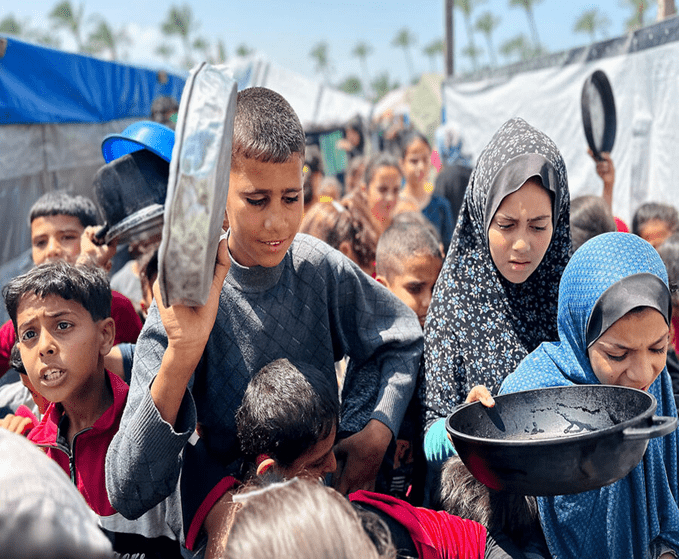
The most immediate and harrowing dimension of the Gaza famine is the immense human suffering. According to the IPC report, over half a million people are facing starvation, with catastrophic conditions projected to spread. This is not merely a matter of food scarcity but the “deliberate collapse of the systems needed for human survival,” as stated by UN Secretary-General António Guterres.
Reports from the ground paint a grim picture of emaciated children, rising malnutrition rates, and starvation-related deaths. In July 2025 alone, over 12,000 children were identified as acutely malnourished, a six-fold increase since the beginning of the year. Gaza’s Health Ministry has reported a sharp rise in deaths from malnutrition, a figure contested by Israel. The reality for Gazans is a daily struggle for survival, with hundreds of thousands going days without food.
Political Dimension: International Pressure and Geopolitical Stalemate
The declaration of famine has intensified international pressure on Israel. However, the Israeli government has rejected the IPC report’s findings, dismissing them as “Hamas lies.” This response is consistent with a pattern of dismissing global criticism.
A crucial aspect of the political dimension is the role of the United States, which is seen as the only power with significant leverage over Israel. The silence from Washington on the famine declaration has been widely criticized, with many believing it gives a tacit go-ahead for the continuation of policies that exacerbate the crisis. Meanwhile, other global powers like France, the UK, Canada, and Australia have announced their intention to recognize a State of Palestine, signaling growing international impatience with the status quo.
Legal Dimension: Allegations of War Crimes
The deliberate use of starvation as a method of warfare is a war crime under international law. The UN human rights chief, Volker Türk, has stated that the famine is a “direct result” of Israeli Government policies and that the resulting deaths may amount to the war crime of willful killing.
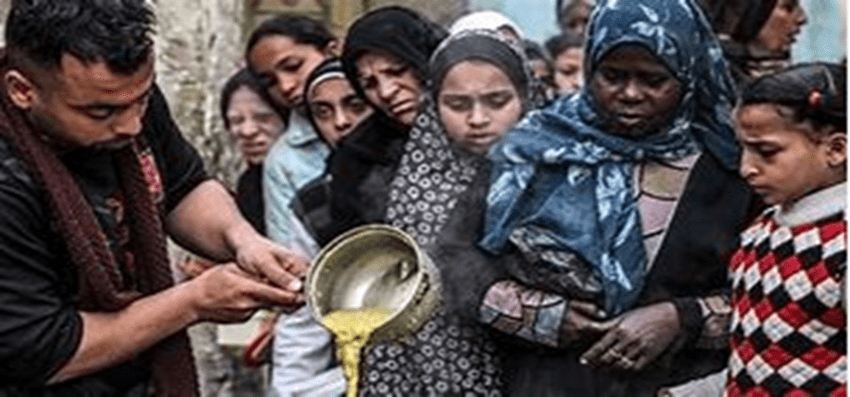
As the occupying power, Israel has unequivocal obligations under international law to ensure the food and medical supplies of the population. The systematic obstruction of humanitarian aid, as alleged by the UN Relief Chief, is seen by many as a clear violation of these legal responsibilities. The Fourth Geneva Convention, which prohibits an occupying power from transferring its civilian population into occupied territory, is another legal instrument that is frequently cited in the context of the broader Israeli-Palestinian conflict.
Security Dimension: Aid as a Weapon of War
From a security perspective, the control and distribution of aid have become deeply enmeshed in the conflict. Israel’s tight control over the flow of food into Gaza has been a long-standing practice, with critics arguing that it has been used to exert pressure on the Palestinian population. Israel has been accused of integrating food into its military strategy, restricting aid and only easing controls when famine alerts appear, only to tighten them again when international attention wanes.
The Israeli government has defended its actions by claiming that Hamas steals and hoards aid, a claim that is difficult to verify and is contested by humanitarian organizations. The reliance on private entities like the Gaza Humanitarian Foundation for aid distribution, at whose sites hundreds of aid seekers have reportedly been killed, has also drawn sharp criticism for being insufficient and unsafe. The UN and other aid agencies have consistently called for the opening of all crossings to allow for the massive and unimpeded scale-up of humanitarian assistance.
Conclusion: A Call for Immediate and Unimpeded Action
The famine in Gaza is a multifaceted crisis that extends far beyond a simple shortage of food. It is a stark manifestation of a prolonged political conflict, with devastating humanitarian consequences and serious legal implications. The international community’s response, particularly that of key global players, will be critical in determining whether this man-made tragedy can be halted and reversed. The overwhelming consensus among international humanitarian bodies is that an immediate ceasefire and the full, unimpeded access for humanitarian aid are the essential first steps to alleviating the suffering and addressing this catastrophic, and preventable, famine.
UPSC mains exam question based on the provided topic:
General Studies Paper 2: “Important International institutions, agencies and fora- their structure, mandate.”
General Studies Paper 2: “Effect of policies and politics of developed and developing countries on India’s interests” and “Bilateral, regional and global groupings and agreements involving India and/or affecting India’s interests.”
General Studies Paper 4: “Ethical issues in international relations and funding; corporate governance.”
Question 1: The “deliberate use of starvation as a method of warfare” is considered a grave breach of International Humanitarian Law (IHL). In the context of the declared famine in Gaza, critically analyse the mechanisms available to the international community to ensure accountability and uphold the principles of IHL in modern conflicts. (250 words, 15 marks)
Question 2: The response of global powers to humanitarian crises is often shaped by a complex interplay of geopolitical interests and ethical responsibilities. Examine this statement in light of the international response to the famine in Gaza, highlighting the challenges faced by multilateral institutions. (150 words, 10 marks)
(Source – The Indian Express)