
The expansion of electric vehicles presents certain challenges to the Indian automotive sector and, more generally, to the government
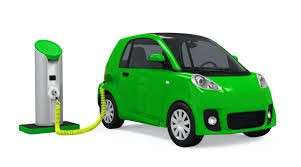
- Fiscal Strain and Revenue Loss: The transition away from Internal Combustion Engine (ICE) vehicles poses a significant threat to government revenues. A substantial portion of central and state exchequers is funded by excise duties and VAT on petrol and diesel. A decline in fossil fuel consumption will necessitate a new fiscal framework, potentially including:
- Grid Stability and Energy Security: The large-scale adoption of EVs will place immense pressure on India’s power grid. Unregulated peak-hour charging could lead to grid instability and blackouts. This requires a two-pronged strategy:
- Supply-side: Strengthening transmission and distribution networks and integrating more renewable energy.
- Demand-side: Promoting ‘smart charging’ solutions and time-of-day tariffs to balance the load.
- Geopolitical Vulnerability and Supply Chain Security: The EV ecosystem is heavily dependent on a few nations for critical raw materials. Over 70% of the global battery supply chain, including lithium and cobalt processing, is controlled by China. This creates significant geopolitical and economic vulnerabilities.
- Aggressively pursue a “China+1” strategy through diplomatic and trade partnerships with mineral-rich nations like Australia and Latin American countries.
- Bolster the Production Linked Incentive (PLI) scheme for Advanced Chemistry Cell (ACC) battery manufacturing to foster domestic capabilities and achieve ‘Atmanirbhar Bharat’ in the truest sense.
- The Environmental Paradox: Battery Waste Management: While EVs offer zero tailpipe emissions, their end-of-life management presents a formidable environmental challenge. Disposing of lithium-ion batteries is hazardous. A robust policy framework for a circular economy is essential, focusing on:
- Recycling: Establishing industrial-scale facilities for ethically extracting precious metals from used batteries, mandated by stringent Extended Producer Responsibility (EPR) norms.
- Ensuring a Just Transition: The shift to EVs threatens the livelihoods of lakhs of workers in the traditional auto sector, especially in engine and transmission manufacturing, and the unorganised mechanic segment. A “Just Transition” policy is needed, focusing on large-scale reskilling and upskilling programs under the Skill India Mission to prepare the workforce for EV manufacturing and servicing roles.
- Profitability in a Post-Subsidy Era: Much of the initial EV demand has been driven by government subsidies. As these incentives are gradually phased out, auto companies face the challenge of making EVs profitable on their own, especially in the price-sensitive Indian market. This requires significant investment in R&D to lower costs.
- Technological Obsolescence and Consumer Trust: Battery technology is evolving at a rapid pace. This creates a risk of rapid product obsolescence and impacts the resale value of EVs, a key concern for Indian buyers. Building consumer trust requires transparent communication about battery life, degradation, and offering robust warranty and buy-back schemes.
- Building a Resilient Ecosystem: The challenge extends beyond manufacturing vehicles. It involves creating a comprehensive ecosystem, including a widespread and reliable charging network, a supply chain for spare parts, and a network of trained technicians for after-sales service, particularly in Tier-II and Tier-III cities.
- Long-Term Policy Certainty: The government must provide a clear, long-term policy roadmap beyond the FAME scheme to instill investor confidence.
- Focus on R&D: A national mission focused on R&D for alternative battery chemistries, such as sodium-ion or solid-state batteries, can reduce import dependency and costs.
- Infrastructure as a Utility: Treating charging infrastructure as an essential public utility can accelerate its deployment across highways and rural areas.
- Integrated Planning: EV policy must be integrated with energy, environmental, and labour policies to create a holistic and sustainable transition.