
The action taken by the Delhi government indicates a significant shortcoming — the absence of a well-conceived anti-pollution strategy
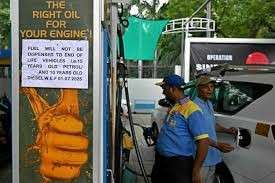
- Environmental Protection: Older vehicles, often based on outdated emission norms (BS-III/IV), are major contributors to air pollution, releasing high levels of PM2.5, NOx, and hydrocarbons. Phasing them out is crucial for achieving cleaner air, especially in urban centres.
- Enhanced Road Safety: Aging vehicles are more prone to mechanical failures and often lack modern safety features like airbags, ABS, and crumple zones, making them a significant road safety hazard.
- Economic Stimulus: The policy is designed to boost demand for new, more fuel-efficient, and safer vehicles. This, in turn, is expected to invigorate the automobile sector, a key contributor to India’s GDP.
- Promoting a Circular Economy: It aims to create a formal, organised ecosystem for vehicle scrapping, which can efficiently recover and recycle materials like steel, aluminium, and plastic, reducing reliance on raw material imports and minimising waste.
- Treating the Symptom, Not the Disease: The policy penalises the possession of old vehicles without tackling the socio-economic compulsions that force people to retain them. For a small farmer, a transport operator, or a lower-middle-class family, a vehicle is a critical asset. They do not use old vehicles by choice, but due to a lack of financial capacity to upgrade. The “curbs” are thus seen as punitive rather than enabling.
- Inadequate and Unattractive Incentives: The incentives offered—such as scrap value for the old vehicle, a waiver on registration fees, and a minor discount from manufacturers—are often insufficient to bridge the substantial cost of a new vehicle. The net financial burden on the owner remains prohibitively high, discouraging voluntary participation.
- Lack of Supporting Infrastructure: The policy’s success is contingent on a nationwide network of automated testing stations and Registered Vehicle Scrapping Facilities (RVSFs). The rollout of this infrastructure has been slow and is largely concentrated in and around major cities, leaving vast rural and semi-urban areas unserved. Without accessible and reliable facilities, the policy remains an idea on paper.
- Ignoring the Informal Sector: The vehicle scrapping industry in India is currently dominated by a vast, unorganised sector (e.g., Mayapuri in Delhi) that provides livelihoods to thousands. The new policy, with its high entry barriers for formal RVSFs, risks displacing these workers without providing a clear roadmap for their integration, skilling, or alternative employment.
- Neglect of Public Transport: The most sustainable solution to vehicular pollution and congestion is a robust, affordable, and accessible public transportation system. The over-emphasis on replacing private vehicles does little to reduce the overall number of vehicles on the road. A modal shift to public transport would be a far more impactful long-term strategy.
- Rural-Urban Disconnect: The policy framework appears urban-centric. In rural India, an old tractor or jeep may be used sparingly but is indispensable for agricultural activities. Applying uniform, stringent norms without considering usage patterns and economic realities of the hinterland is inequitable.
- Needs-Based, Graduated Incentives: Instead of a one-size-fits-all approach, incentives should be linked to the owner’s economic profile. Subsidised loans, stronger financial support for commercial vehicle owners, and special packages for farmers can make the transition viable.
- Infrastructure on a Mission Mode: The government must fast-track the creation of testing and scrapping facilities under a PPP model, ensuring their equitable distribution across the country.
- Formalising the Informal: A transition plan must be developed to skill and absorb workers from the unorganised scrapping sector into the formal ecosystem.
- Integrated Mobility Plan: The vehicle scrappage policy should be one component of a larger National Urban Mobility Policy that prioritises investment in public transport, non-motorised transport, and last-mile connectivity.