
The sanctions imposed by the U.S. on a UN official are both perilous and irrational.
Synopsis: The recent decision by the United States to impose sanctions on the UN Special Rapporteur for the occupied Palestinian territories, Ms. Francesca Albanese, represents a grave assault on the principles of international law, the autonomy of United Nations mechanisms, and the global human rights framework. This move, ostensibly in response to her critical reports on Israeli policies, raises profound questions about the weaponisation of foreign policy to stifle dissent and evade accountability.
Context: The imposition of sanctions by the United States on UN Special Rapporteur Francesca Albanese is a watershed moment, signalling a dangerous erosion of the post-war global order. It transcends the specifics of the Israeli-Palestinian conflict and strikes at the very heart of multilateral accountability. The implications of this action can be analysed across multiple dimensions.
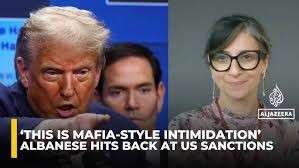
- Shielding an Ally: It attempts to delegitimise and neutralise a credible voice that has been systematically documenting alleged violations of international humanitarian law.
- Intimidation Tactic: It sends a chilling message to other independent experts, rapporteurs, and international bodies like the International Criminal Court (ICC). The threat of personal sanctions—asset freezes and travel bans—could induce self-censorship, thereby weakening the entire human rights monitoring ecosystem. Other nations may be emboldened to adopt similar tactics against experts investigating their own records.
- Erosion of Multilateralism: It weakens the institutions where developing countries have a collective voice, tilting the balance of power further towards a unipolar or selectively multipolar world.
- A Dangerous Precedent: If the U.S. can sanction a UN expert for reports on Palestine, a precedent is set that could be used against Indian officials or experts in the future on sensitive issues.
- Strategic Dilemma: It places India in a difficult position, balancing its strategic partnership with the U.S. against its long-standing support for the Palestinian cause and the integrity of the UN system.