Some positive news: Regarding India’s trade statistics

Introduction

Trade is the veritable engine of economic growth, reflecting a nation’s competitiveness, integration with the global economy, and the resilience of its domestic industries. The recent analysis of India’s trade data for mid-2025, aptly titled “Some cheer,” signals a moment of cautious optimism. While there are commendable achievements that warrant celebration, the qualifier “some” serves as a crucial reminder of the persistent structural challenges and external vulnerabilities that temper the good news. A multi-dimensional analysis of this data reveals a narrative of dualistic progress, where an ascendant services sector coexists with a merchandise sector still striving for a stronger footing on the global stage.

The Sources of Cheer: Services and Strategic Sectors

The primary cause for cheer, as highlighted by the data, undoubtedly stems from India’s robust services exports. Continuing its remarkable growth trajectory, the services sector has become the backbone of India’s trade balance, consistently generating a substantial surplus. This is no longer limited to traditional IT and BPO services. The mid-2025 data likely points to a significant diversification into higher-value areas such as Global Capability Centres (GCCs), engineering R&D, consultancy, and financial technology exports. This demonstrates India’s growing intellectual capital and its successful transition from a low-cost service provider to a global hub for innovation and specialized skills.

In the merchandise segment, the “cheer” is more specific and sectoral. The success of Production-Linked Incentive (PLI) schemes is becoming visible, particularly in electronics manufacturing. The significant rise in the export of smartphones and other electronic goods indicates a positive shift in the manufacturing landscape. This success, coupled with the enduring strength of the pharmaceutical and engineering goods sectors, reflects the positive impact of targeted industrial policy. Geopolitically, these gains can be linked to the “China Plus One” strategy, as global corporations diversify their supply chains, presenting a strategic window of opportunity that India has begun to capitalize on.

The “Some” in the Cheer: Underlying Concerns and Structural Impediments

However, the analysis rightly cautions against excessive exuberance. The merchandise trade deficit, though perhaps moderated, remains a significant concern. This is largely driven by India’s high import dependency on crude oil and other essential commodities, making the trade balance susceptible to volatile global energy prices. Furthermore, while PLI-led exports are growing, a deeper look may reveal a high import content in these “Made in India” products, particularly in critical components like semiconductors. This indicates that while we are succeeding in assembly, a significant leap in deep manufacturing and value chain integration is yet to be achieved.

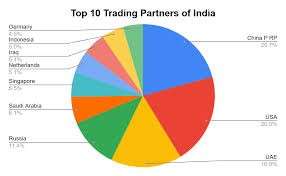
The global economic dimension adds another layer of caution. A slowdown in demand in key markets like the USA and the European Union could cap the potential of India’s export growth. This highlights the risk of market concentration and underscores the need for aggressive diversification into new markets in Latin America, Africa, and Southeast Asia. Furthermore, non-tariff barriers, quality standards, and sustainability-linked regulations (like the EU’s Carbon Border Adjustment Mechanism) pose emerging challenges that Indian exporters must navigate.

The Way Forward: Consolidating Gains and Addressing Weaknesses
To transform “some cheer” into “sustained cheer,” a multi-pronged and forward-looking strategy is imperative.
Conclusion

The mid-2025 trade data, as encapsulated by the phrase “Some cheer,” presents a realistic portrait of the Indian economy: one of significant achievement, latent potential, and persistent challenges. The success in services and strategic manufacturing sectors is a testament to India’s policy efforts and entrepreneurial spirit. However, the underlying trade deficit and structural weaknesses serve as a sobering reminder that the path to becoming a global export powerhouse is a marathon, not a sprint. The real test lies in leveraging the current momentum to address deep-seated issues, thereby ensuring that the cheer of today becomes the foundation for the broad-based, resilient, and sustainable economic growth required to achieve the vision of a ‘Viksit Bharat’.

UPSC Mains exam questions of the provided topic:

GS Paper 3: Indian Economy and issues relating to planning, mobilization of resources, growth, development; Effects of liberalization on the economy, changes in industrial policy, and their effects on industrial growth.
Question 1: India’s recent trade performance evokes ‘cautious optimism’, primarily driven by a robust services sector, while the merchandise trade deficit remains a persistent challenge. Critically analyse the structural factors contributing to this dualism in India’s external sector. What policy interventions are necessary to bolster merchandise export competitiveness? (15 Marks, 250 Words)
Question 2: The Production-Linked Incentive (PLI) scheme is credited with boosting specific merchandise exports. To what extent has this policy been successful in enhancing domestic value addition and reducing import dependence? Discuss the challenges that remain in integrating India deeply into global value chains. (10 Marks, 150 Words)
(Source – The Hindu)

Would you like to start learning with us?​

Leave a Reply

Your email address will not be published. Required fields are marked *