
The suggested CAFE standards indicate that tackling the issue requires an improved strategy
Context: As India continues on its high-growth trajectory, the explosion in vehicle ownership presents a classic development paradox. While enhancing mobility and economic activity, it has also made our cities some of the most polluted in the world. Vehicular emissions, a primary source of PM2.5, NOx, and other toxins, are a critical public health and environmental challenge that demands structured solutions and decisive policy action, moving beyond piecemeal interventions.
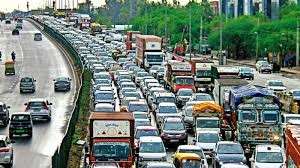
- Public Health Crisis: The most direct impact is on human health. Pollutants from vehicle exhausts are linked to a rise in respiratory ailments like asthma, cardiovascular diseases, and even cognitive impairments, imposing a heavy burden on our healthcare system and reducing labour productivity.
- Environmental Degradation: Emissions contribute significantly to the formation of smog, reduce visibility, and lead to acid rain. They are also a major source of greenhouse gases, undermining India’s climate commitments under the Paris Agreement and its “Panchamrit” goals.
- Economic Drag: The economic costs are substantial, including healthcare expenditures, loss of workdays due to illness, and a negative impact on sectors like tourism. Traffic congestion, a by-product of high vehicle density, further leads to fuel wastage and economic losses.
- Leapfrogging to BS-VI Norms: This was a significant move to mandate cleaner fuel and engine technology, aligning India with global standards.
- FAME (Faster Adoption and Manufacturing of Hybrid & Electric Vehicles) Scheme: This scheme aims to incentivise the shift towards electric mobility.
- Vehicle Scrappage Policy (V-VMP): The policy seeks to phase out old, polluting vehicles by offering incentives for scrapping them.
- National Clean Air Programme (NCAP): This provides a national framework to tackle air pollution in a comprehensive manner across 131 cities.
- Revamp PUC System: Link PUC certification directly to the annual insurance renewal process. Utilise remote sensing technology for on-road emission monitoring to identify gross polluters in real-time, ensuring compliance is not just on paper.
- Implement Congestion Pricing: Introduce congestion or low-emission zones in high-density urban areas. This would discourage the use of private vehicles in crowded city centres and generate revenue for strengthening public transport.
- Focus on Public Transport: The ultimate solution lies in reducing the number of vehicles on the road. Massive investment is needed to create a reliable, safe, affordable, and well-connected public transport network, including buses and metro rail with effective last-mile connectivity.
- Promote Non-Motorised Transport (NMT): Cities must be redesigned to include dedicated and safe cycling lanes and pedestrian-friendly infrastructure to encourage walking and cycling for short-distance travel.