
The Rio Declaration emphasized the unity among the BRICS
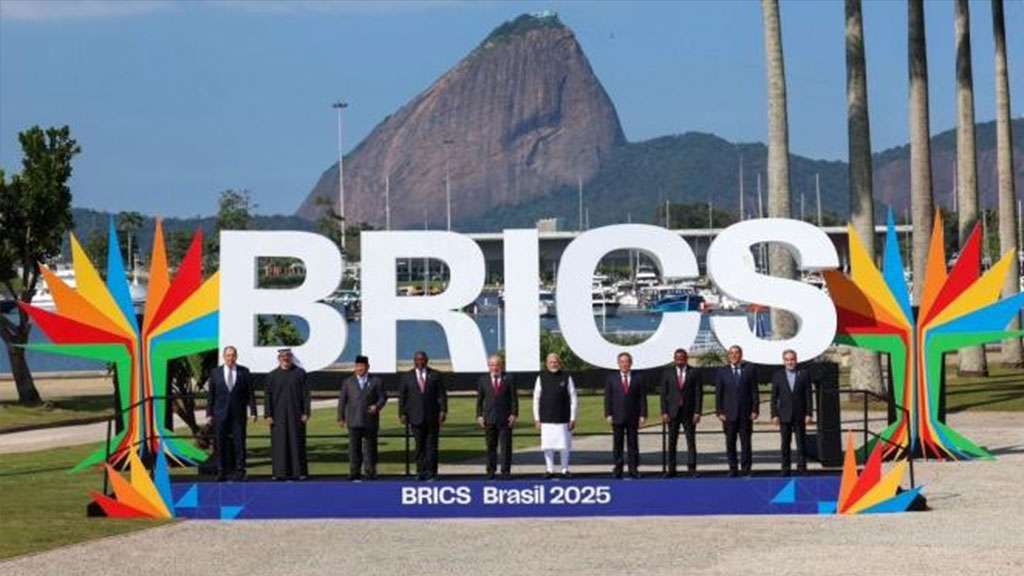
- Enhanced Role of the New Development Bank (NDB): The summit called for expanding the NDB’s capital base and fast-tracking loan approvals for infrastructure and sustainable development projects. A key decision was to aim for 40% of all financing to be in local currencies by 2027, reducing reliance on the US dollar.
- BRICS Payment System: Building on previous discussions, the summit announced a pilot project for a “BRICS Bridge,” a common platform for processing cross-border payments in national currencies. This move is a direct step towards creating an alternative to the SWIFT system, thereby enhancing the members’ financial sovereignty.
- Contingent Reserve Arrangement (CRA): Members agreed to conduct a stress test of the $100 billion CRA to ensure its readiness to tackle any future balance of payment crises, positioning it as a credible alternative to IMF-led bailouts.
- UNSC Reforms: The joint statement reiterated the urgent need for comprehensive reform of the United Nations, particularly the Security Council, to make it more representative and effective. Brazil, India, and South Africa’s aspirations for permanent membership were explicitly supported.
- Consolidation of BRICS+: Following the historic expansion in 2024, the summit focused on integrating the new members (e.g., Saudi Arabia, UAE, Iran, Egypt, Ethiopia) into the group’s frameworks. This expansion has significantly enhanced the bloc’s political and economic heft, controlling a major share of global energy resources.
- Mediation and Conflict Resolution: The bloc offered a collective framework for dialogue to address ongoing global conflicts, positioning itself as a balancing power that prioritizes diplomacy over coercion.
- The India-China Conundrum: The unresolved border dispute between India and China remains the most significant internal friction. While leaders project unity on the global stage, this bilateral tension undermines the trust and coherence required for deeper strategic cooperation.
- Divergent Interests: The bloc comprises diverse political systems (democracies and autocracies) and economic models. For instance, while Russia and China may champion a more confrontational anti-West stance, India and Brazil prefer to maintain their strategic autonomy, balancing relations with all major powers.
- Implementation Gap: BRICS has often been criticized for powerful rhetoric that is not matched by concrete, on-ground action. The success of initiatives like the BRICS payment system will depend entirely on overcoming technical and political hurdles to implementation.
- Digital Public Infrastructure (DPI): Leveraging India’s success with the India Stack, members agreed to create a “BRICS Open-Source Digital Platform” to promote interoperable and inclusive digital solutions for the Global South.
- AI Governance: The summit proposed a BRICS framework for the ethical development and deployment of Artificial Intelligence, aiming to create an alternative to Western-dominated regulatory standards.
- Climate Justice: The bloc reiterated its commitment to the principle of “Common But Differentiated Responsibilities” (CBDR), calling on developed nations to fulfill their promises of climate finance and technology transfer.