
Express View: The defence agreement between Saudi Arabia and Pakistan should not cause concern for India
However, the agreement should still encourage contemplation regarding India’s hesitance to provide security assistance to its partners in the Gulf
Introduction
A recent report discusses a potential Saudi-Pakistan defence pact, concluding that it “shouldn’t alarm India.” This perspective, while seemingly counterintuitive given the historical complexities of regional alliances, considering all strategic, economic, and geopolitical dimensions.

Understanding the Context: India-Saudi Arabia Relations
Firstly, it’s crucial to acknowledge the evolving nature of India’s relationship with Saudi Arabia. Over the past decade, bilateral ties have transitioned from a buyer-seller energy dynamic to a multifaceted strategic partnership. High-level visits, increasing trade, and cooperation in areas like counter-terrorism and intelligence sharing underscore this shift. Saudi Arabia is a crucial partner for India’s energy security and a significant source of remittances from the Indian diaspora. This deepening engagement suggests a mutual desire for regional stability and economic prosperity.
The Nature of the Saudi-Pakistan Defence Pact: A Closer Look
The alarmist view often stems from a historical lens, where any Pakistani defence alignment is perceived as inherently anti-India. However, the specific contours of a Saudi-Pakistan pact need careful analysis. Is it a full-fledged military alliance committing Saudi Arabia to Pakistan’s conflicts, or a more limited agreement focusing on defence cooperation, training, and technology transfer?
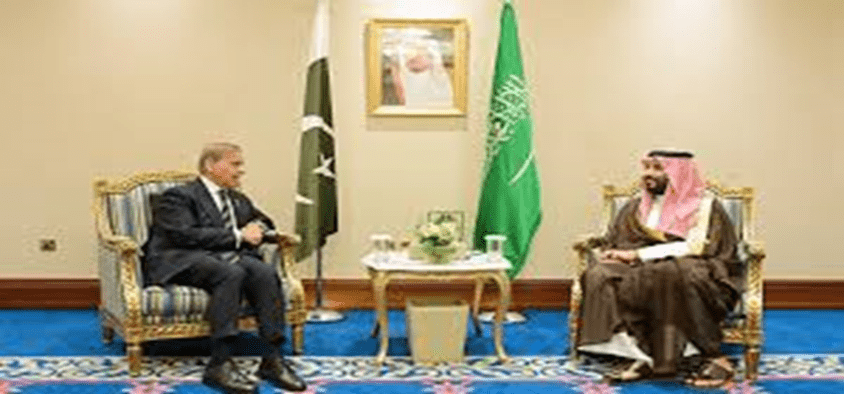
Saudi Arabia, a significant regional power, has its own strategic imperatives. Its security concerns often revolve around maintaining stability in the Gulf, managing relations with Iran, and ensuring the safety of its vast oil infrastructure. Pakistan, with its substantial military and nuclear capabilities, can offer expertise in areas like counter-terrorism, military training, and potentially, conventional defence capabilities. A pact could serve Saudi Arabia’s goal of diversifying its security partnerships and enhancing its indigenous defence capabilities, rather than exclusively targeting India.
Geopolitical Realities and India’s Strategic Autonomy
The global geopolitical landscape is fluid, with multiple power centres and shifting alliances. India, with its commitment to strategic autonomy, has successfully navigated these complexities. It maintains strong defence ties with traditional partners like Russia and the US, while simultaneously forging new partnerships with countries in the Indo-Pacific and the Middle East.
An alliance between Saudi Arabia and Pakistan, even if it entails military cooperation, does not necessarily diminish India’s strategic standing. India’s own defence capabilities are robust, and its economic power provides significant leverage. Furthermore, India’s “Look West” policy has yielded substantial diplomatic dividends, strengthening its position in the Gulf and mitigating the impact of any hostile alignments.
Economic Considerations and Shared Interests
The economic dimension is equally important. Both Saudi Arabia and India are members of the G20 and play significant roles in the global economy. Their economic interests are largely convergent, focusing on stable energy markets, trade routes, and investment opportunities. A stable and prosperous South Asia and the Middle East serve the interests of both nations.
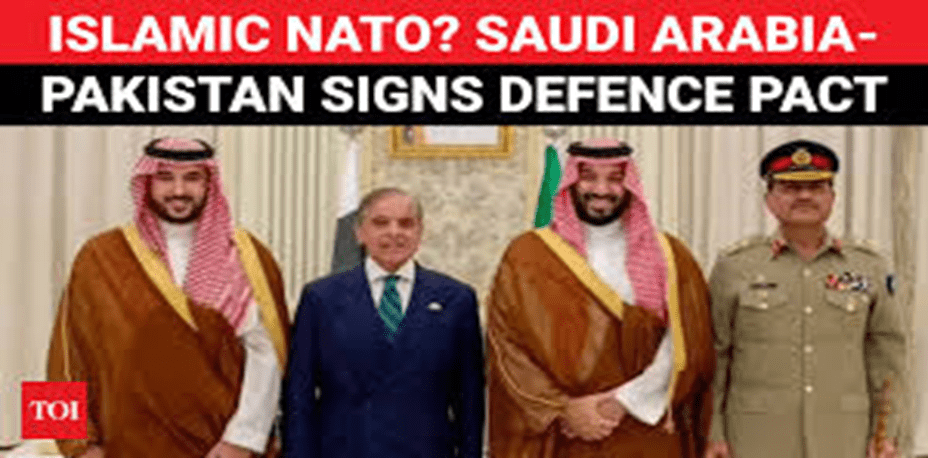
While Pakistan seeks economic assistance and investment from Saudi Arabia, India’s economic engagement with Riyadh is far more substantial and diverse. Saudi investments in India are growing, and India’s large consumer market presents significant opportunities for Saudi businesses.
Potential Areas of Cooperation and Mitigation
Instead of viewing the pact with alarm, India can leverage its strong ties with both nations to ensure regional stability. Maintaining open channels of communication with Saudi Arabia is paramount. India can emphasise its commitment to regional peace and its willingness to cooperate on shared security challenges like terrorism.
Moreover, India can highlight its own capabilities as a reliable defence partner for countries in the Gulf. Its burgeoning defence manufacturing sector and expertise in various military domains present an attractive alternative or complement to existing partnerships.
Conclusion: A Balanced Perspective
The Indian Express’s “Express View” that a Saudi-Pakistan defence pact shouldn’t alarm India is a nuanced and pragmatic assessment. While vigilance is always necessary in international relations, a knee-jerk alarmist reaction would be counterproductive. India’s strong bilateral ties with Saudi Arabia, its strategic autonomy, and its growing economic and military prowess provide sufficient buffers against any perceived threat. The pact is more likely an outcome of Saudi Arabia’s evolving security calculus and Pakistan’s quest for strategic depth and economic support, rather than a direct challenge to India. By maintaining a balanced perspective and proactively engaging with regional partners, India can continue to safeguard its interests and promote stability in a dynamic geopolitical environment.
UPSC mains exam question based on the provided topic:
General Studies Paper II: International Relations – India and its neighbourhood- relations; Bilateral, regional and global groupings and agreements involving India and/or affecting India’s interests
General Studies Paper III: Security – Linkages between development and spread of extremism; Role of external state and non-state actors in creating challenges to internal security. OR General Studies Paper II: International Relations – Effect of policies and politics of developed and developing countries on India’s interests; Indian diaspora.
Question 1. “The recent ‘Express View’ suggests that a potential Saudi-Pakistan defence pact should not alarm India. Analyse this statement by critically examining the evolving dynamics of India-Saudi Arabia relations and the multifaceted strategic interests driving Riyadh’s foreign policy. Discuss how India can leverage its diplomatic and economic strength to mitigate potential challenges and enhance regional stability amidst such geopolitical shifts.” (15 marks – 250 words)
Question 2. “While a Saudi-Pakistan defence pact might be viewed primarily through a security lens, its economic and internal security implications for India warrant careful consideration. Evaluate the economic dimensions of India’s engagement with Saudi Arabia and Pakistan, respectively. Further, discuss how enhanced defence cooperation between Saudi Arabia and Pakistan, if driven by specific external or non-state actors’ concerns, could indirectly impact India’s internal security landscape, particularly in terms of radicalisation or cross-border terrorism.” (15 marks – 250 words)
(Source – Indian Express)