
No value will be derived from the elimination of two words from the Preamble
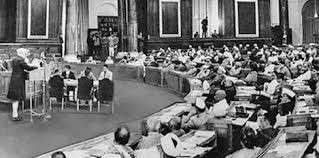
- The Preamble serves a dual purpose. Firstly, it declares the source of the Constitution’s authority, which lies with “We, the People of India.” This establishes the principle of popular sovereignty. Secondly, it outlines the core objectives of the Indian State:
- Objectives for Citizens: To secure for all its citizens Justice (social, economic, and political), Liberty (of thought, expression, belief, faith, and worship), Equality (of status and of opportunity), and to promote among them all Fraternity, assuring the dignity of the individual and the unity and integrity of the Nation.
- This vision provides a framework to evaluate the laws and actions of the government, making the Preamble a touchstone of constitutional morality.
- The legal status of the Preamble has evolved through landmark judicial pronouncements, settling its meaning and place within the constitutional framework.
- Berubari Union Case (1960): The Supreme Court initially held that the Preamble was not a part of the Constitution and therefore not enforceable in a court of law. It was seen merely as a key to open the minds of the makers.
- Kesavananda Bharati Case (1973): This historic judgment overturned the Berubari verdict. The Court declared that the Preamble is an integral part of the Constitution. It held that the Preamble can be amended under Article 368, but its basic features cannot be altered, as they form part of the ‘Basic Structure’ of the Constitution. Furthermore, it established the Preamble as a crucial aid in interpreting ambiguous provisions of the Constitution.
- S.R. Bommai Case (1994): The Court further solidified this position, stating that “Secularism” is a basic feature of the Constitution, and any state government functioning against this principle could be dismissed under Article 356.
- Debate on ‘Socialist’: Critics argue that the term is a relic of a past era and is inconsistent with India’s post-1991 market-oriented economy. However, the Supreme Court has clarified that Indian socialism is not state-run communism but democratic socialism, which aims to eradicate inequality of income, status, and opportunity. This ideal of social justice remains profoundly relevant in a country still grappling with poverty and disparity.
- Debate on ‘Secular’: The term ‘Secular’ is the most contested. Proponents of its removal argue it was an imposition and that India’s ethos has always been secular. However, its inclusion was meant to be an explicit reaffirmation of a foundational principle. Indian secularism, based on Sarva Dharma Sama Bhava (equal respect for all religions), is a cornerstone of our pluralistic society. The debate is often a proxy for contesting the very nature of the Indian state—whether it should maintain a principled distance from all religions or lean towards a majoritarian character.