Envisioned integrity: Regarding behavior on social media
It is imperative for courts to safeguard the rights of citizens and to prevent the state from exercising unchecked authority
Synopsis: The editorial from The Hindu, “Imagined righteousness: On conduct on social media,” critiques the Supreme Court of India’s directive urging the Union government to formulate guidelines for regulating online speech. The article posits that such a move, while seemingly aimed at curbing harmful content, falls into a “deceptive trap of imagined righteousness.” It argues that this approach dangerously empowers an executive already prone to weaponizing speech laws, thereby threatening the foundation of freedom of expression, fostering a culture of self-censorship, and ultimately undermining democracy. The concept extends beyond institutional actions to individual conduct online, where a similar sense of moral certitude fuels polarization and degrades public discourse.
The Multidimensional Impact of Imagined Righteousness
1. Institutional Overreach and Constitutional Concerns
- The core of the issue lies in the judiciary seemingly encouraging executive encroachment on fundamental rights. The Supreme Court’s push for new regulations, prompted by a petition against derogatory remarks aimed at disabled persons, is viewed as a misguided step.
- Empowering the Executive: Critics argue this directive hands more power to a government that has already expanded its control over online speech through instruments like the IT Rules, 2021.This is seen as particularly dangerous given the executive’s record of using such regulations for political ends.
- Chilling Effect on Free Speech: Expanding the state’s power to police speech has predictable and severe consequences. It encourages partisan authorities to suppress art, journalism, and political dissent they find disagreeable. Consequently, citizens may become wary of expressing themselves freely, leading to a “chilling effect” where essential truths and diverse ideas are stifled.
- Misinterpreting the Judicial Role: The editorial suggests that the judiciary’s fundamental role is to be a protector of rights within the constitutional framework, not to facilitate state control over speech. By focusing on the “misuse of freedom of speech,” the court risks undermining its position as a guardian of liberty.
2. Psychological Drivers of Online Conduct
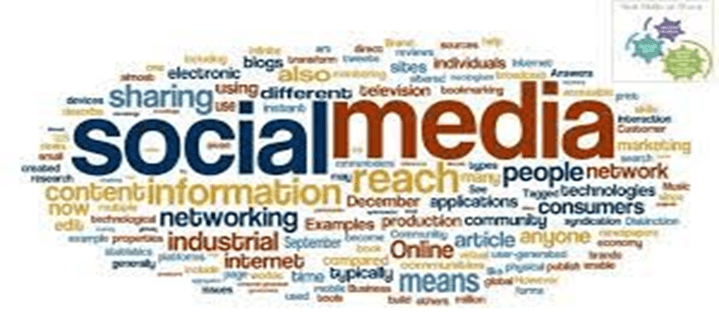
- The concept of “imagined righteousness” is equally potent at the individual level, where social media platforms act as arenas for moral performance.
- Moral Grandstanding: This refers to the use of moral discourse for self-promotion and status-seeking. Individuals may engage in exaggerated displays of outrage or pile on in public shaming not to contribute to a solution, but to enhance their own social standing within their in-group.
- The Addictive Nature of Outrage: Expressing moral outrage can be psychologically rewarding, activating pleasure centers in the brain and reinforcing a sense of one’s own moral superiority. Social media algorithms, which prioritize emotionally charged content, exploit this tendency, creating a cycle of perpetual indignation.
- Virtue Signaling and Identity: Online righteousness often serves as a form of “virtue signaling,” where public declarations of moral values are used to project a positive self-image and reinforce one’s social identity. This can lead to performative activism, or “slacktivism,” where superficial gestures overshadow meaningful action.

3. Societal Consequences of a Righteousness Culture
The collective impact of this behavior is profoundly damaging to the social fabric and democratic health.
- Erosion of Civil Discourse: When the goal shifts from understanding to self-promotion, constructive dialogue becomes impossible. It fosters a polarized environment where differing viewpoints are not engaged with but are instead met with condemnation.
- Increased Polarization: The tendency to attack or publicly shame those with different beliefs contributes directly to societal divisions. Echo chambers and filter bubbles intensify this effect, as individuals are cocooned with like-minded peers, reinforcing their sense of righteousness and demonizing the “other.”
- Focus on the Trivial: Carefully curated outrage over isolated incidents can often distract from addressing complex, systemic problems that require nuanced and collaborative solutions.
4. The Dilemma of Regulation
While the dangers of over-regulation are clear, the existence of hate speech, incitement to violence, and targeted harassment online is a genuine problem that requires redress. The editorial argues, however, that existing laws in India are sufficient to tackle criminalized speech. The challenge lies in enforcing these laws judiciously without creating broad new rules that can be easily misused. The complex balance between protecting citizens from harm and upholding the right to free speech remains a central challenge for policymakers globally.
The Way Forward
Addressing the multifaceted problem of “imagined righteousness” requires a nuanced approach rather than broad censorship.
- Judicial Restraint and Upholding Rights: The judiciary must prioritize its role as the ultimate defender of constitutional rights, resisting the urge to prompt executive rulemaking in the sensitive domain of free speech.
- Promoting Digital Literacy: A crucial long-term solution is to cultivate a more discerning digital citizenry. Education on media literacy, critical thinking, and the psychological manipulations at play on social media can empower users to resist performative outrage and engage more constructively.
- Platform Accountability: Social media companies must be held responsible for designing platforms that do not algorithmically amplify outrage for profit. This includes greater transparency in content moderation and promotion policies.
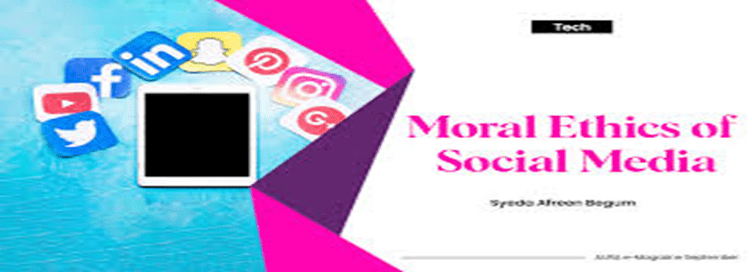
- Fostering Ethical Online Culture: The ultimate solution lies in cultivating a digital public sphere grounded in principles of empathy, civility, and a shared commitment to seeking truth over a performative display of righteousness.
UPSC mains exam question based on the provided topic:
GS Paper II: Polity, Governance, and Social Justice
Indian Constitution: Fundamental Rights (Article 19 – Freedom of Speech and Expression), Separation of Powers.
Polity & Governance: Structure, organization, and functioning of the Executive and the Judiciary; Government policies and interventions for development in various sectors and issues arising out of their design and implementation.
Social Justice: Mechanisms, laws, institutions, and Bodies constituted for the protection and betterment of vulnerable sections.
GS Paper IV: Ethics, Integrity, and Aptitude
Ethics and Human Interface: Essence, determinants, and consequences of Ethics in human actions; dimensions of ethics.
Attitude: Moral and political attitudes; social influence and persuasion.
Emotional Intelligence: Concepts, and their utilities and application in administration and government.
Question 1: The judiciary’s push for executive-led guidelines to regulate online speech, while aimed at curbing misuse, risks upsetting the delicate balance between fundamental rights and state control. Critically analyze this statement in the context of the ‘chilling effect’ on free expression and the principle of separation of powers. (250 words – 15 Marks)
Question 2: What do you understand by the concept of ‘imagined righteousness’ in the context of social media conduct? Discuss how this phenomenon, driven by moral grandstanding and performative outrage, erodes civil discourse and poses a challenge to ethical governance. (150 words – 10 Marks)
(Source – The Hindu)