
Efforts in caregiving: Regarding the Anshakalin Stri Parichars, female community health workers
Women involved in the provision of rural health care ought to receive improved compensation
Introduction:
India’s rural healthcare system rests significantly on the shoulders of its women community health workers, a dedicated yet often overlooked workforce. The ‘Anshakalin Stri Parichars’ (ASPs) of Maharashtra, who predate even the Accredited Social Health Activists (ASHAs) and Anganwadi workers, represent a critical component of this workforce. However, their long-standing service is marred by systemic neglect, low wages, and a lack of basic rights, bringing to the forefront the paradoxical nature of a nation that relies heavily on their “labour of care” while simultaneously devaluing it. This situation highlights a deeply entrenched structural contradiction where the invaluable public service of rural women is reframed as mere “opportunities,” masking the underlying exploitation.
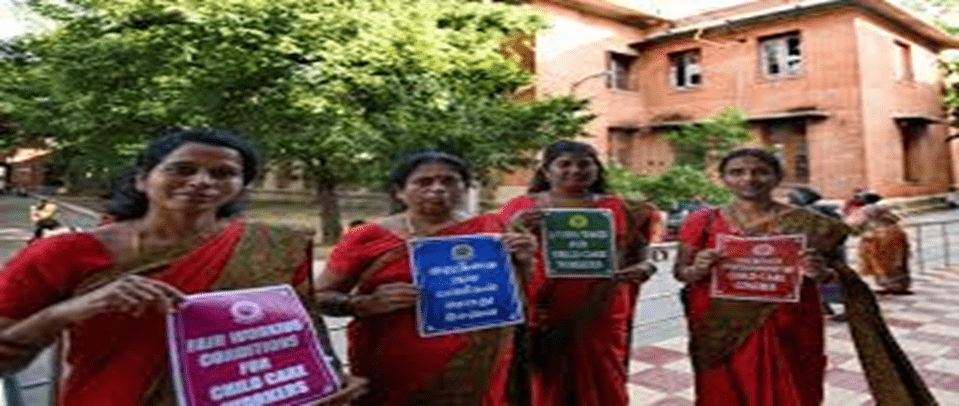
The Plight of the Anshakalin Stri Parichars:
For decades, the ASPs have been instrumental in delivering essential health services in rural Maharashtra, from maternal and child care to immunization and disease surveillance. Despite their wide-ranging responsibilities, their monthly remuneration has remained stagnant at a meager ₹3,000 since 2016, a figure that starkly trails decades of inflation. This financial precarity is compounded by a lack of job security, pensions, safety equipment, and travel allowances. The physical risks they undertake, from potential snakebites while clearing hospital grounds to accidents during vaccination duties, are borne without the safety net of insurance or compensation.
The state’s response to their plight has been characterized by indifference and verbal assurances that fail to translate into meaningful action. While a labor court in Nagpur acknowledged in 2023 that they deserve the protection of the Minimum Wages Act, the final decision was left to the state. The government’s recent promise of an increase to ₹6,000 a month by December 2025, while a step up, still falls significantly short of the wages received by multi-purpose health workers.
A Gendered and Caste-Inflected Hierarchy:
The systemic neglect of ASPs reveals a deeply ingrained gendered and caste-inflected hierarchy within the public health sector. The fact that these crucial roles are predominantly filled by poor, rural women has made them easy to ignore and their labor easy to devalue. This devaluation is a stark reminder of how certain types of work, particularly caregiving, are often rendered invisible and considered low-status simply because of who performs them. The ongoing protests by ASPs in various parts of Maharashtra are a testament to their growing frustration and a demand for recognition and dignity.
Broader Implications for Community Health Workers:
The challenges faced by the Anshakalin Stri Parichars are not isolated. They mirror the struggles of a larger cohort of women community health workers across India, including ASHAs and Anganwadi workers. These women form the backbone of the country’s primary healthcare and nutrition programs, yet they are often classified as “volunteers” or “honorary workers,” a terminology that conveniently absolves the state of its responsibility to provide them with the status and benefits of formal employment.
This systemic issue has far-reaching consequences. The poor working conditions and inadequate compensation can lead to demotivation and a decline in the quality of services rendered, ultimately impacting the health and well-being of rural communities. Furthermore, the denial of basic labor rights to this massive, predominantly female workforce is a significant impediment to women’s economic empowerment and gender equality.
The Way Forward:
Addressing the grievances of the Anshakalin Stri Parichars and other community health workers requires a fundamental shift in perspective and policy.
- Formal Recognition and Regularization: The first and most crucial step is to formally recognize them as workers, not volunteers. This would entail regularizing their services and ensuring they are covered under the ambit of labor laws, including the Minimum Wages Act.
- Fair and Timely Remuneration: Their wages must be revised to reflect their immense contribution and the high cost of living. A structured and periodic wage revision mechanism should be put in place.
- Social Security and Benefits: It is imperative to provide them with comprehensive social security benefits, including pensions, health insurance, and paid leave. A robust system of compensation for work-related accidents and hazards is also essential.
- Empowerment and Capacity Building: Investing in their training, skill development, and providing them with necessary safety gear and resources will not only enhance their efficiency but also boost their morale and sense of self-worth.
- Gender-Sensitive Policymaking: The formulation of policies related to community health workers must be approached through a gender lens, acknowledging the unique challenges and contributions of women in this sector.
Conclusion:
The “labour of care” provided by the Anshakalin Stri Parichars and millions of other women community health workers is not a mere act of charity but a vital public service that underpins India’s healthcare system. Recognizing their work as labor, and granting them the rights and dignity they deserve, is not just a matter of justice and equity but a prerequisite for building a robust and resilient public health infrastructure. The ongoing agitations are a powerful call to action for the state to rectify a historical wrong and truly value the hands that heal and nurture the nation.
UPSC mains exam question based on the provided topic:
GS Paper 1: Social Empowerment, Role of Women and Women’s Organization: This question directly addresses the role of women in the healthcare sector and the social disempowerment they face. It requires an analysis of how gender stereotypes about care work contribute to their exploitation. Salient features of Indian Society, Diversity of India: The mention of “caste” prompts a discussion on the social stratification within this workforce, where women from marginalized communities are disproportionately represented and face compounded vulnerabilities.
GS Paper 2: Issues Relating to Development and Management of Social Sector/Services relating to Health, Education, Human Resources: This question is centrally located in this syllabus area. It asks for an examination of the systemic issues in the management of human resources within the public health sector. Government Policies and Interventions for Development in various sectors and Issues arising out of their Design and Implementation: It requires a critical evaluation of government policy (or lack thereof) regarding the employment status of community health workers. The candidate needs to analyse the design flaws in programs like the National Health Mission that perpetuate this “volunteer” status.
GS Paper 3: Indian Economy and issues relating to planning, mobilization of resources, growth, development, and employment: The question calls for suggestions on formalizing employment, which directly relates to labor market reforms, resource allocation for the health sector, and creating decent work conditions.
GS Paper 4: Ethics and Human Interface – Public service values and Ethics in Public administration: While not a direct fit, the underlying theme relates to the ethical responsibility of the state towards its frontline workers. A good answer could touch upon the values of compassion, dedication to public service (shown by the workers), and the need for fairness and justice in public administration.
Question 1: “The systemic neglect of women community health workers like the ‘Anshakalin Stri Parichars’ reveals a deep-seated structural contradiction where their invaluable ‘labour of care’ is devalued. Critically analyse this statement in the context of gender, caste, and the informalisation of essential public services in India.” (250 words, 15 marks)
Question 2: “Community health workers are the backbone of India’s rural public health infrastructure, yet they are often treated as ‘honorary volunteers’ rather than formal employees. Discuss the policy and governance challenges that this creates. Suggest concrete measures to formalize their role and ensure their socio-economic security.” (250 words, 15 marks)
(Source – The Hindu)