
During the Mysuru Dasara, Banu Mushtaq champions the principles of pluralism and secularism
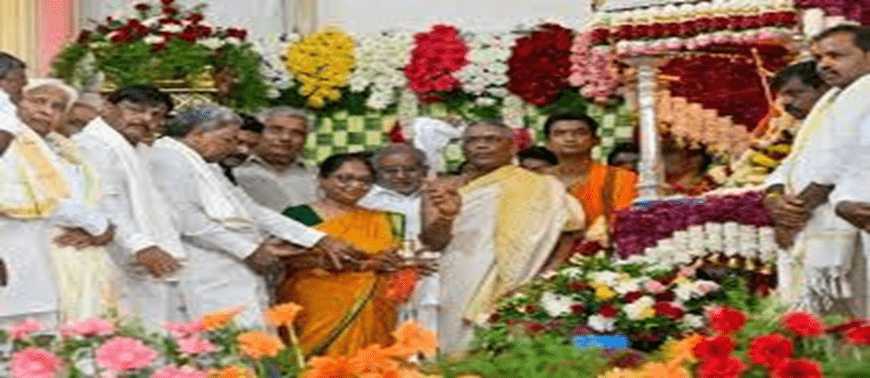
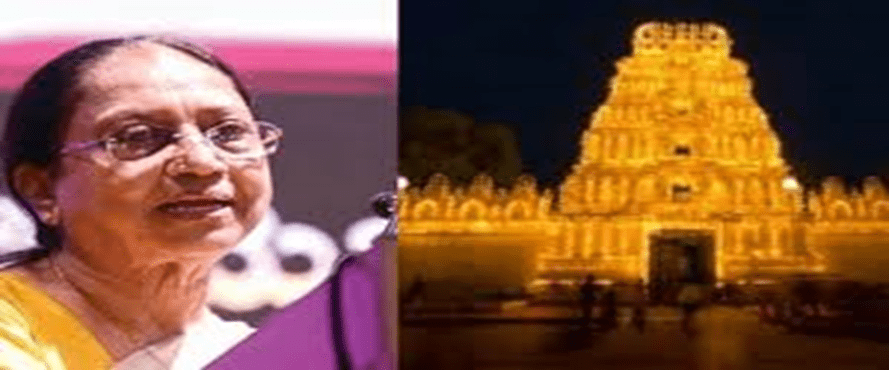
The commencement of the renowned Mysuru Dasara festival by Banu Mushtaq, the Kannada writer and activist who won this year’s International Booker Prize, held significance beyond mere ceremony.
Her involvement in the event, which included prayers at the Chamundeshwari temple, represented not only a meaningful gesture but also a reaffirmation of constitutional principles.
Introduction
The annual Mysuru Dasara celebrations, a spectacle of grandeur and tradition, often evoke images of royal pageantry, vibrant processions, and deep-rooted cultural heritage. However, beyond the visual splendor, these celebrations also serve as a poignant reminder of India’s enduring commitment to pluralism and secularism. A recent report in The Indian Express (September 25, 2025) highlighted a shining example of this ethos in the contributions of Banu Mushtaq, whose involvement in the Dasara festivities underscores the inclusive spirit that defines this national festival.
Dasara: More Than Just a Hindu Festival
While Dasara is intrinsically linked to Hindu mythology, particularly the triumph of good over evil embodied by Goddess Chamundeshwari, its observance in Mysuru has historically transcended religious boundaries. The Wadiyar dynasty, patrons of the festival for centuries, fostered an environment where diverse communities participated and contributed to the celebrations. This inclusive approach has ensured that Dasara remains a cultural event for all, reflecting the syncretic traditions prevalent in India.
Banu Mushtaq’s Role: A Symbol of Unity
Banu Mushtaq’s active participation in the Mysuru Dasara, as reported, is a powerful testament to this pluralistic tradition. While the specific nature of her involvement isn’t detailed in the prompt, her presence itself sends a strong message. It signifies that the festival is not exclusive to any single community but is a shared heritage, embraced and enriched by individuals from various religious backgrounds. In a nation where communal harmony is sometimes challenged, figures like Banu Mushtaq serve as crucial bridges, demonstrating that shared cultural spaces can foster understanding and unity.
Upholding Secularism in Practice
Secularism, in the Indian context, doesn’t imply the absence of religion but rather the equal respect for all religions and the state’s neutrality towards them. Banu Mushtaq’s involvement in Dasara exemplifies this practical application of secularism. It showcases how individuals from minority communities can not only coexist but also actively contribute to and find meaning in celebrations that originate from a different religious tradition. This organic integration stands in stark contrast to mere tokenism; it reflects a genuine acceptance and shared ownership of cultural heritage.
Historical Context and Evolution
The roots of this pluralistic approach can be traced back to the enlightened rule of various Indian kings and rulers who understood the importance of fostering a harmonious society. The Mysuru Wadiyars, for instance, were known for their patronage of diverse arts and cultures, often inviting artisans and scholars from different communities to contribute to their court and to public festivals. This historical legacy has created a framework where Dasara has evolved to accommodate and embrace diverse participation.
Contemporary Relevance and Challenges
In today’s socio-political landscape, the message conveyed by Banu Mushtaq’s participation holds even greater significance. It serves as a powerful counter-narrative to divisive forces that seek to sectarianize cultural events. By highlighting such examples, the media, like The Indian Express, plays a vital role in reinforcing the values of inclusiveness and mutual respect.

However, upholding pluralism and secularism is an ongoing endeavor. It requires continuous effort from individuals, communities, and institutions to ensure that traditions like Dasara continue to be platforms for unity rather than division. It also necessitates a conscious effort to acknowledge and celebrate the contributions of all communities to India’s rich cultural mosaic.
Conclusion
Banu Mushtaq’s role in the Mysuru Dasara is more than just an individual story; it is a microcosm of India’s enduring commitment to its foundational principles. It reminds us that cultural festivals, while rooted in specific traditions, have the power to unite, to celebrate diversity, and to reaffirm the collective identity of a nation that prides itself on its pluralistic and secular character. As the celebrations unfold in Mysuru, the spirit of Banu Mushtaq’s involvement will undoubtedly resonate as a beacon of harmony, echoing the true essence of India.
UPSC mains exam question based on the provided topic:
GS Paper II: Indian Constitution—historical underpinnings, evolution, features, amendments, significant provisions, and basic structure.
GS Paper II: Welfare schemes for vulnerable sections of the population by the Centre and States and the performance of these schemes; mechanisms, laws, institutions, and Bodies constituted for the protection and betterment of these vulnerable sections.
GS Paper II: Role of civil services in a democracy.
Question 1: The Mysuru Dasara festival, through its long-standing traditions and recent instances of inter-community participation such as that of Banu Mushtaq, serves as a powerful illustration of India’s composite culture. Discuss how such cultural events reflect and reinforce the pluralistic ethos of Indian society. (15 Marks, 250 words)
Question 2: While the Indian Constitution guarantees secularism, its practical manifestation is often challenged by societal divisions. In this context, analyze how individual actions and community participation, exemplified by Banu Mushtaq at Mysuru Dasara, contribute to strengthening the foundational principle of secularism in contemporary India. (15 Marks, 250 words)
(Source – Indian Express)