
The process of incinerating toxic waste resulting from the Bhopal tragedy required considerable time and effort
- Groundwater Contamination: Studies have repeatedly shown the presence of heavy metals, pesticides, and volatile organic compounds in the groundwater of surrounding colonies, making it unfit for consumption.
- Inter-generational Health Crisis: The contamination has been linked to a high incidence of cancers, congenital birth defects, and chronic illnesses in the second and third generations of residents, who had no direct exposure to the 1984 gas leak. The waste perpetuates the tragedy, making it a continuous public health emergency.
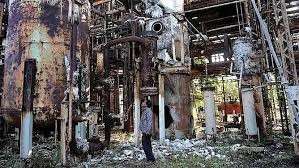
- The Liability Quagmire: The central legal battle has been over who is responsible for the clean-up. Dow Chemical, which acquired Union Carbide, has consistently evaded liability, arguing that the 1989 settlement of $470 million covered all claims. The Indian government has contested this, but legal and diplomatic efforts have been slow and largely ineffective.
- Judicial Intervention and Bureaucratic Inertia: While the Supreme Court and National Green Tribunal have periodically issued directives, their implementation has been crippled by a lack of political will, inter-agency squabbles, and bureaucratic red tape. The debate over how and where to dispose of the waste—be it through incineration at Pithampur or shipping it to Germany—has been stuck in a loop of technical disagreements and public opposition (NIMBY syndrome).
- Violation of the ‘Polluter Pays’ Principle: This globally accepted principle, which mandates that the party responsible for producing pollution is responsible for paying for the damage done to the natural environment, has been blatantly ignored. The failure to hold Dow Chemical financially and morally accountable sets a dangerous precedent for other multinational corporations operating in India.
- Environmental Justice: The continued suffering of Bhopal’s poorest residents, who live near the contaminated site and rely on toxic water, is a textbook case of environmental injustice. It underscores a system where the health and well-being of marginalised communities are expendable.
- Scientifically Sound and Transparent Disposal: The chosen method of disposal, likely high-temperature incineration, must be executed with utmost scientific rigour and transparency. Independent national and international experts must oversee the process to ensure it does not create secondary pollution and to build public trust.
- Comprehensive Site Remediation: Disposing of the stored waste is only the first step. A long-term, well-funded plan is imperative for the complete remediation of the contaminated soil and groundwater at the plant site and in the surrounding areas.
- Strengthening Legal Frameworks: The Bhopal saga must compel India to strengthen its legal framework for industrial disasters. This includes amending the Environment (Protection) Act, 1986, to establish clear, no-fault liability for hazardous industries and creating a robust fund for environmental remediation to prevent such delays in the future.
- Renewed Pursuit of Accountability: The government must not abandon its pursuit of holding Dow Chemical accountable for the clean-up costs and long-term health damages. This is crucial not just for Bhopal but for upholding the principle of corporate accountability on a global scale.