
Addressing the learning curve: Government schools require enhanced accountability
However, the consistently declining quality of government schools has significantly contributed to the motivation behind this preference
Introduction
The state of government schools in India remains a persistent concern, with a recent Business Standard article highlighting the urgent need for greater accountability. While the Right to Education (RTE) Act and various government initiatives have aimed to universalize access and improve quality, the “learning curve” in many public institutions continues to trend downwards. This essay will explore the multifaceted dimensions of this challenge, analysing its root causes, consequences, and potential solutions within the UPSC framework.

Understanding the Problem: A Multi-dimensional Crisis
The issue of underperforming government schools is not monolithic; it encompasses several interconnected dimensions:
- Quality of Education and Learning Outcomes: Despite increased enrollment, foundational learning outcomes remain dismal. ASER reports consistently show a significant percentage of children in higher grades unable to read basic texts or perform simple arithmetic. This points to a failure in effective pedagogy, curriculum delivery, and assessment. The Business Standard article likely underscores this persistent gap between access and actual learning.
- Teacher Accountability and Motivation: A critical pillar of any education system is its teaching force. Issues such as teacher absenteeism, lack of subject matter expertise, insufficient professional development, and a disconnect between performance and career progression plague government schools. The lack of a robust performance management system often leads to low morale and reduced commitment, directly impacting student learning.
- Infrastructure and Resources: While significant investments have been made, disparities in infrastructure persist. Many schools still lack adequate classrooms, separate toilets for girls, drinking water facilities, and essential learning materials like libraries and science labs. This creates an un conducive learning environment.

- Parental and Community Engagement: Unlike private schools where parents often demand accountability, engagement in government schools can be limited. Lack of awareness, socio-economic barriers, and a perception of limited agency can prevent parents from actively participating in school affairs and holding authorities accountable.
- Governance and Bureaucracy: The highly centralized and bureaucratic structure often hinders quick decision-making, resource allocation, and adaptation to local needs. Corruption, red-tapism, and a lack of transparency further exacerbate the problem, diverting funds and diluting the impact of well-intentioned policies.
- Socio-economic Disparities: Government schools often cater to the most vulnerable sections of society, where students face challenges like malnutrition, lack of home support, and pressure to contribute to household income. These external factors, while not directly attributable to the school, significantly impact learning and necessitate a more supportive and inclusive educational environment.
Consequences of Inaction:
The long-term implications of a failing public education system are severe. It perpetuates the cycle of poverty, widens socio-economic inequalities, and hinders national development. A poorly educated workforce struggles to adapt to the demands of a modern economy, impacting productivity and global competitiveness. Furthermore, it undermines the democratic ideal of equal opportunity, leaving a significant portion of the youth without the skills to thrive.
Path Forward: Towards Greater Accountability
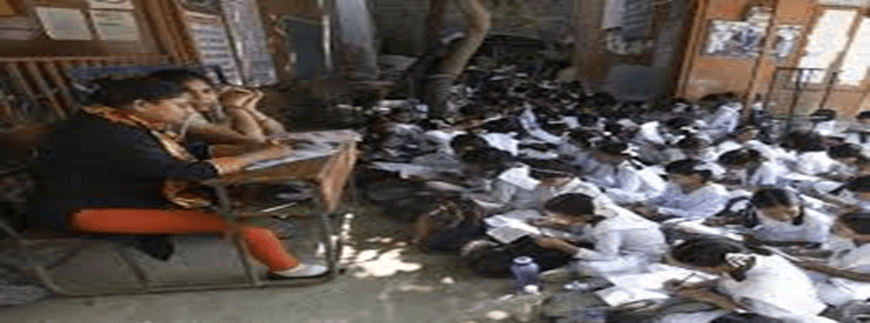
Addressing this complex challenge requires a multi-pronged approach focused on enhancing accountability at all levels:
- Performance-Based Teacher Management: Implementing robust performance appraisal systems linked to student learning outcomes, regular professional development, and a transparent transfer policy can incentivize better performance. This should be coupled with attractive incentives for teachers serving in remote or challenging areas.
- Decentralized Governance and School-Based Management: Empowering School Management Committees (SMCs) with greater decision-making powers regarding budget utilization, teacher deployment, and curriculum adaptation can foster local ownership and responsiveness.
- Transparent Data and Public Audits: Making learning outcome data, resource allocation, and teacher attendance publicly available can empower communities and parents to demand accountability. Regular social audits can ensure effective utilization of funds.
- Curriculum Reform and Pedagogical Innovation: Moving beyond rote learning to foster critical thinking, problem-solving, and creativity is crucial. Investing in modern teaching aids, technology integration, and continuous teacher training in innovative pedagogical practices is essential.
- Strengthening Regulatory Mechanisms: While avoiding over-regulation, there is a need for effective monitoring and evaluation mechanisms that ensure compliance with educational standards and address grievances swiftly.
- Community Engagement and Parental Awareness: Launching campaigns to educate parents about their rights and responsibilities, fostering parent-teacher associations, and creating platforms for feedback can strengthen community involvement.
- Addressing Socio-Economic Determinants: Complementary interventions such as mid-day meals, health check-ups, and counseling services can help mitigate the impact of socio-economic disadvantages on student learning.
Conclusion
The Business Standard’s emphasis on greater accountability serves as a crucial reminder that while access to education is a fundamental right, quality education is the ultimate goal. By fostering a culture of responsibility among all stakeholders – from policymakers to parents – India can truly ensure that its government schools become catalysts for upward mobility and national progress, rather than traps in a downward learning curve. The future of a significant portion of India’s youth, and indeed the nation itself, hinges on this critical reform.
UPSC mains exam question based on the provided topic:
GS Paper II: Focuses on Governance, Social Justice (education as a social welfare scheme, rights-based approach), Government Policies and Interventions for Development in various sectors. Question 1 directly addresses institutional failures, governance issues, and policy effectiveness.
GS Paper III: Focuses on Indian Economy (human capital, inclusive growth, demographic dividend), Science and Technology (leveraging tech for governance, data analytics).
Question 1. “Despite constitutional mandates and significant policy interventions like the Right to Education (RTE) Act, government schools in India continue to grapple with persistent challenges in achieving desired learning outcomes. Critically analyse the primary institutional and governance failures that contribute to this accountability deficit, and suggest comprehensive reforms to strengthen the public education system.” (250 words, 15 marks)
Question 2. “The underperformance of government schools poses a significant impediment to India’s demographic dividend and inclusive economic growth. Discuss how a lack of accountability in the public education system impacts human capital formation and exacerbates socio-economic disparities. To what extent can leveraging technology and data analytics offer a viable pathway to enhance transparency and accountability in the delivery of quality education?” (250 words, 15 marks)
(Source – Business Standard)